
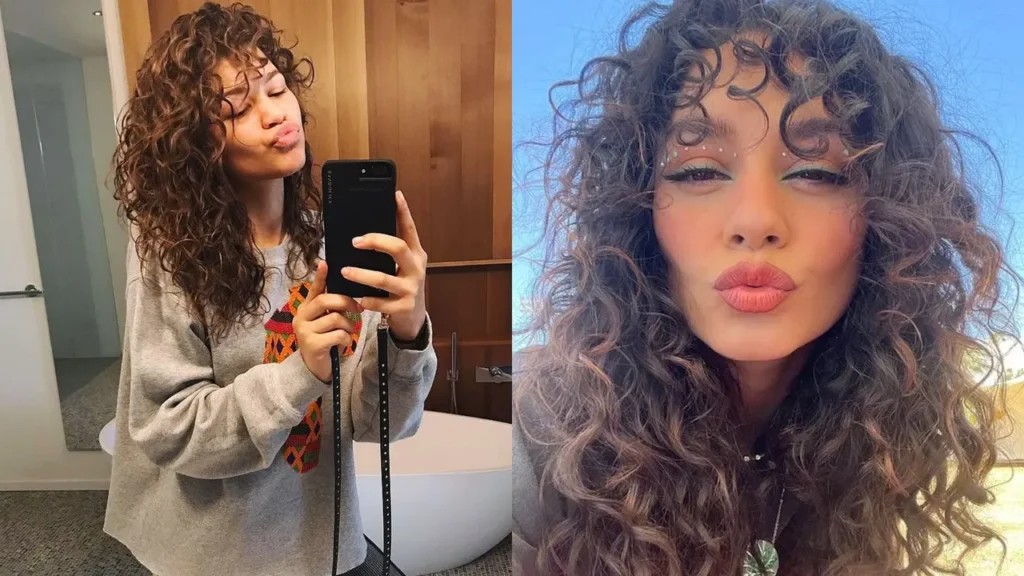
Curly Hair Care Routine for Frizz-Free Hair
Curly hair has a reputation for being “high maintenance,” but honestly, most of the frustration comes from using the wrong routine entirely, not the hair itself being difficult. A proper curly hair care routine built around your specific curl pattern makes an enormous difference, and it took me embarrassingly long to figure that out myself.
Let’s break down what actually works instead of the generic “just use curl cream” advice you’ve probably already tried.
Understanding Your Curl Pattern First
Curls range from loose waves to tight coils, and products that work beautifully for one type can weigh down or under-define another completely.
Quick answer: A solid curly hair care routine involves sulfate-free cleansing, deep conditioning, applying product on soaking wet hair, and air-drying or diffusing without disturbing the curl pattern through excessive touching.
Step 1: Switch to Sulfate-Free Shampoo
Regular shampoos strip natural oils that curly hair desperately needs to fight frizz. Sulfate-free, gentle cleansers keep curls hydrated without the harsh stripping effect.
Step 2: Deep Condition Regularly
Curly hair is naturally more prone to dryness because oils from the scalp struggle to travel down the curl pattern. A deep conditioning mask once a week makes a genuinely visible difference in frizz control.
Step 3: The Wet Application Method
This was a game changer for me personally — applying leave-in conditioner and curl cream on soaking wet hair, not damp or dry hair, helps products distribute evenly and lock in moisture before frizz has a chance to set in.
- Apply products in sections for even coverage
- Scrunch upward gently, don’t rub or twist
- Avoid touching hair while it dries, this is the biggest frizz trigger
Step 4: Skip the Towel, Use a T-Shirt or Microfiber Cloth
Regular towels are too rough and cause frizz by roughing up the hair cuticle. An old cotton t-shirt or microfiber towel, used to gently scrunch out excess water, works significantly better.
Step 5: Diffusing vs Air Drying
Both work, honestly, it depends on your schedule. Diffusing on low heat speeds up drying while maintaining curl definition. Air drying takes longer but is gentler overall if you have the time.
- Diffuse on low heat, cupping curls upward toward the scalp
- Air dry undisturbed if time allows, ideally without touching
- Avoid high heat regardless of method — it damages curl pattern over time
Nighttime Curl Protection
Sleeping on a satin or silk pillowcase reduces friction significantly compared to cotton, which tends to absorb moisture and rough up curls overnight. A loose pineapple bun on top of the head also helps preserve curl shape while sleeping. [link to natural beauty tips guide here]
Common Curly Hair Mistakes to Avoid
Brushing dry curls is probably the single biggest frizz-causing mistake people make. Detangle only when hair is wet and coated in conditioner, using fingers or a wide-tooth comb.
FAQ
Q1. How often should curly hair be washed? Every 2-3 days generally works best, as curly hair doesn’t get oily as quickly as straight hair.
Q2. Should curly hair be brushed when dry? No, brushing dry curls causes significant frizz — detangle only on wet, conditioner-coated hair.
Q3. What’s the best way to apply curl products? On soaking wet hair, applied in sections, using a scrunching motion rather than rubbing.
Q4. Does diffusing damage curly hair? Not if done on low heat — high heat settings are what cause damage over time.
Q5. Why does my curly hair get frizzy overnight? Cotton pillowcases absorb moisture and create friction — switching to satin or silk significantly reduces overnight frizz.
Alt text suggestions:
- “Curly hair care routine with leave-in conditioner application”
- “Scrunching curls with microfiber towel for frizz control”
- “Well-defined frizz-free curls after proper hair care routine”
Conclusion
A proper curly hair care routine isn’t about fighting your natural texture — it’s about working with it using the right techniques and products. Give your curls a genuine month with this routine before switching anything up. Which step in your current routine is the biggest frizz culprit?

 LOOK 01
 LOOK 02