
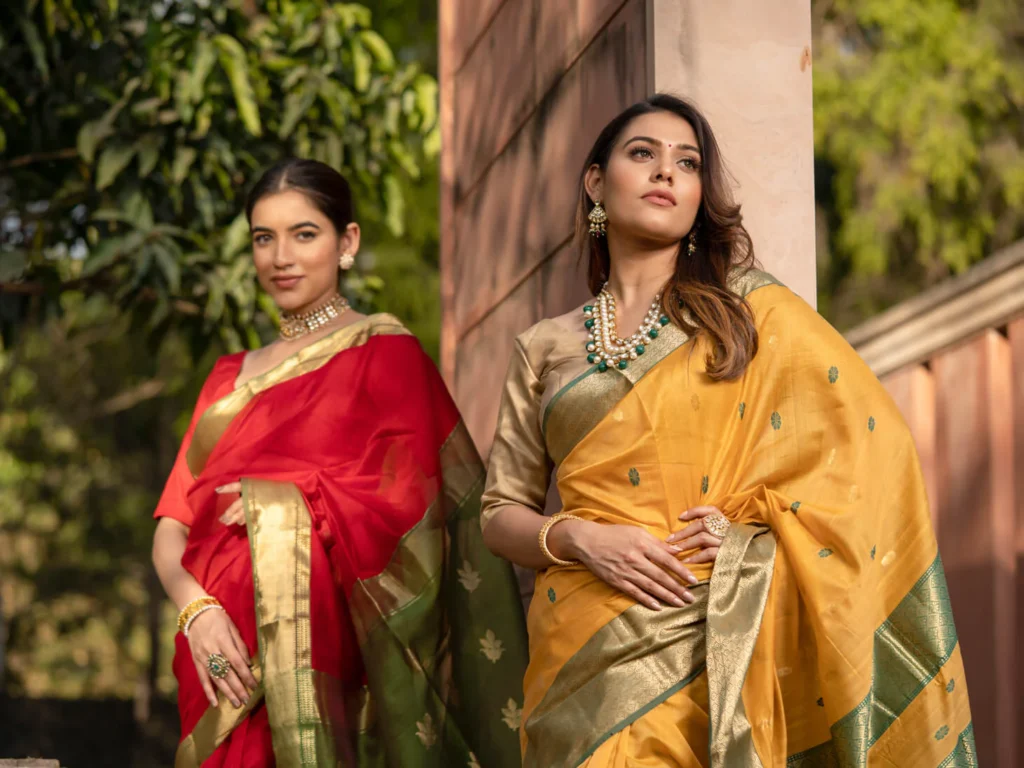
Some textiles are designed for ceremony. The Maheshwari saree was designed for life. Woven in Maheshwar in Madhya Pradesh, it began in the eighteenth century as a royal commission and has stayed popular for one simple reason: it manages to be graceful and practical at once.
Understanding where the Maheshwari saree comes from, and how it is put together, explains why it fits so well into modern wardrobes.
A weave commissioned by a queen
The tradition is closely associated with Queen Ahilyabai Holkar, who commissioned these drapes in the eighteenth century. The brief, as the story goes, was a saree light enough for everyday wear yet refined enough for the royal court. That balance has survived three centuries, and it is the reason the weave still feels current.
Silk warp, cotton weft: the anatomy of the fabric
Maheshwari sarees are typically cotton silk, with silk running along the warp and cotton forming the weft. The pairing gives the cloth two personalities at once. Cotton makes it soft, matte and easy to breathe in, while the silk adds a faint glow that a pure silk saree would deliver only at far greater weight.
For anyone who finds a Banarasi or Kanjeevaram too heavy for a ten hour day, this is the middle ground. It looks festive-ready and wears like an everyday saree.
Borders inspired by a fort
Look at the border first. Maheshwari borders favour stripes, checks and simple florals, patterns borrowed from the carved stonework and domed chhatris around Maheshwar Fort. Because the designs follow architectural geometry, they read as surprisingly modern for something so old.
The reversible border, or Bugdi
Many Maheshwari sarees carry a reversible border, traditionally called a Bugdi. It means the saree can be draped with either side showing, and it adds a layer of practical luxury to the garment. A good reversible border looks equally neat on both faces, which is also a handy test of weaving quality.
Why it works so well today
Quiet luxury is an overused phrase, yet the Maheshwari genuinely earns it. There are no neon shades or heavy zari here. Its appeal lies in how finely it is woven and how gracefully it falls. And since it is light and fluid, you will rarely need to re-tuck it, so the same saree suits a corporate presentation or a small family puja.
Styling a centuries old weave in a contemporary way
The weave may be traditional, but the styling can be playful. Try the saree over a white shirt, under a tailored blazer or with a plain crop top, and add a belt if you want a more defined waist. Keep jewellery light, since the border already supplies the pattern.
How to buy one with confidence
Mass produced imitations often copy the pattern but miss the finish, so the fabric looks flat and the border feels stiff. Check that the borders are even, that the cloth has a soft hand and that the seller can tell you where the saree was woven. A well curated selection of Maheshwari sarees lets you compare colours, border widths and fabric weights side by side before you decide.
Conclusion
The Maheshwari saree has lasted because it was built on a sensible idea: luxury should be wearable. A silk warp, a cotton weft and borders drawn from a fortress gave weavers a formula that still works. Today it suits the woman who wants heritage without the weight, and who prefers to be remembered for how she wore it, not how loud it was.

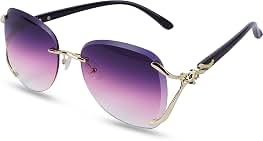 LOOK 01
 LOOK 02
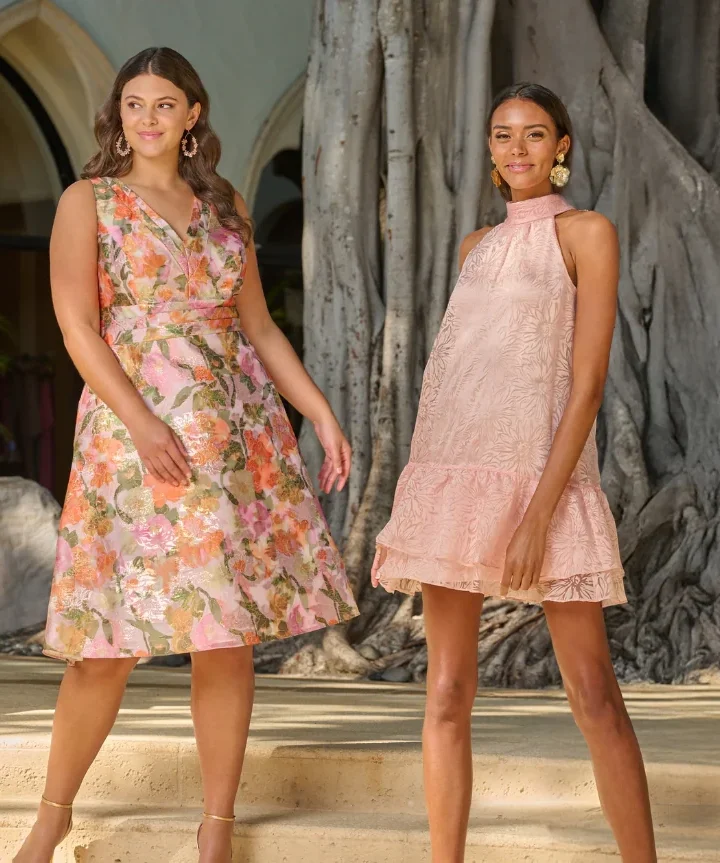 LOOK 03